
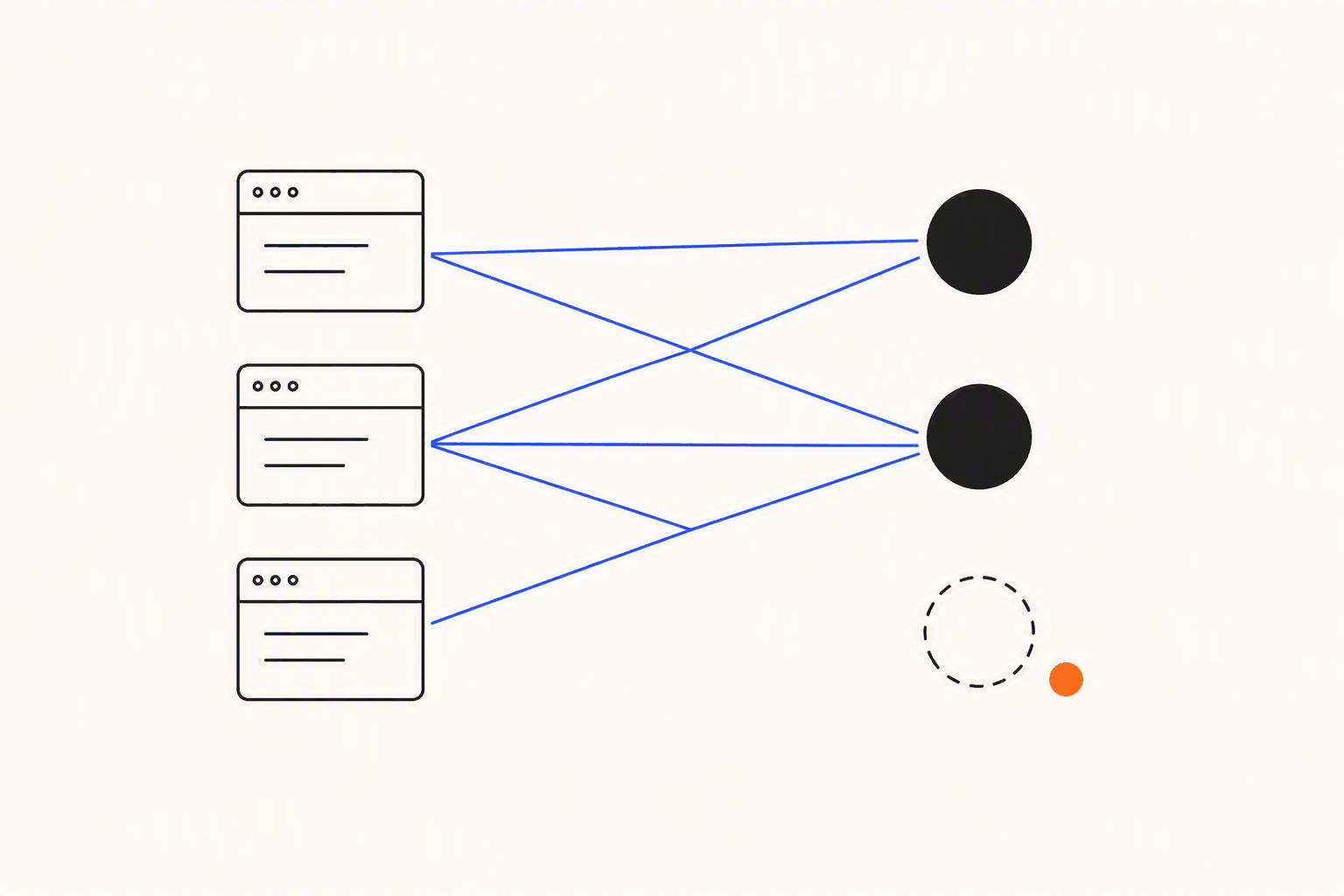
AI citation gap analysis finds the websites AI engines cite when they recommend your competitors and never when they name you. Depra records every site ChatGPT, Gemini, Perplexity and Google AI Overviews cite in your category and shows where your competitors are cited and you are not, at domain, subdomain and page level.
A citation is a link an AI answer gives as its source. Depra's AI citation tracking stores those links for every answer, so for each gap site you see which competitors appear in the answers that cite it, how often answers cite it, what share of those answers name you, and a gap score from 0 to 100 that puts the biggest gaps first.
What is a citation gap?
A citation gap is a site that AI cites in answers recommending your competitors, while none of the answers citing it name you. Say a review blog is cited every time AI recommends two rival brands for "best sunscreen under ₹500", and your brand is missing from all of those answers. That blog is a gap.
ChatGPT with web search, Gemini, Perplexity and Google AI Overviews attach source links to many of their answers. The pages an engine cites are the material it used to write that answer. When those pages list your competitors and leave you out, you have a specific site to work on, with a URL you can open and read.
Why does AI cite your competitor instead of you?
One reason you can check is on the cited page itself: the sites AI cites for your buyers' questions name your competitor and do not name you. An engine with web search finds pages for the question and writes its answer from what those pages say. A listicle that names three rival brands gives the engine three brands to recommend.
Gap analysis turns that into a list you can sort. For each site, Depra shows which of your tracked competitors appear in the answers that cite it, and what share of those answers name you. A 0% share means you are absent from every answer that cites that site.
Cited sources are one cause among several. AI bots blocked from your website, a brand name the engine confuses with something else, or too little written about you anywhere can also keep you out. Our guide on why ChatGPT doesn't mention your brand walks through each cause and how to test for it.
How Depra finds the websites AI cites for your competitors
Depra asks your buyers' questions to four AI engines from inside your chosen country: ChatGPT with web search, Gemini, Perplexity and Google AI Overviews. ChatGPT, Gemini and AI Overviews run daily. Perplexity runs weekly. Every full answer is stored with its source links.
For each answer, Depra records which tracked brands it names and which web pages it cites, so citation tracking covers every stored answer. Gap analysis groups those citations by site, then compares the answers that name a competitor with the answers that name you.
- Questions with your name are left out. A question that already contains your brand makes the engine repeat your name, so those questions do not count toward your numbers by default.
- A missing AI Overview is skipped. When Google shows no AI Overview for a search, that result is kept out of the gap maths, so it never counts as a source that left you out.
- Low-confidence mentions do not count. A brand mention needs a quote from the answer and a confidence check before it counts for you or a competitor.
What the gap view shows
The gap view is a table of sites, one row per domain, subdomain or page, sorted by gap score. Everything in it comes from the answers Depra stored for your project.
- Three levels: switch between whole domains, exact subdomains and single pages. Start with "this site keeps citing my rivals" and drill down to the exact article that lists them.
- A gap score from 0 to 100: built from three numbers you can check. How many competitor answers cite the site, compared with the site most cited in competitor answers in your project. How many of your tracked competitors it appears with. How absent you are from the answers that cite it.
- Site type labels: each domain is labelled editorial, company site, forum, reference, marketplace, directory, government or your own site. Filter to one type, for example forums only.
- Page type labels: each cited page is labelled listicle, comparison, how-to guide, product page, category page, discussion, profile or article, so you can see what content AI cites in your category.
- Gainers and losers: the cited pages list marks pages that are new, rising or falling compared with the previous period.
- Competitor sites filtered out: a rival's own website is cited because the rival owns it, and you cannot earn a mention there. Tracked brands' own domains are removed from gap targets, and other company sites are flagged so they do not end up on your outreach list.
- Cited pages only: every number comes from pages an AI engine linked to in its answer. Pages an engine may have read without citing are not recorded, and Depra does not estimate them.
- Filters and export: narrow the table by engine, site type, competitor or the number of competitors a site recommends, then download it as CSV.
An example from Indian shopping answers
Our published study shows what the raw material of a gap analysis looks like. We asked ChatGPT, Gemini and Perplexity 10 buying questions about skincare and fashion from inside India, 8 times each, in English and in Hinglish (Hindi-English typed in English letters). That gave 480 answers, collected on 14 August 2026.
Those answers carried 4,640 citations. Counted by every appearance, youtube.com was cited 534 times, reddit.com 191 times, nykaa.com 176 times and magicpin.in 133 times. Small Indian review blogs such as indisangam.com (113 citations) were cited more often than most mainstream media.
The counting basis changes the order. Counted by how many answers cite a domain at all, reddit.com leads with 106 of 480 answers and youtube.com follows with 100. When you read your own gap list, check how often a site is cited and how many answers cite it before you pick targets.
These are study numbers across many brands in two categories. They are not any customer's gap. The Hinglish vs English AI shopping study has the method and the full tables.
youtube.com was the most cited domain in 480 India-geolocated AI shopping answers, with 534 of 4,640 citations. (Depra Hinglish vs English study, fieldwork 14 Aug 2026)
What to do with a gap
A gap tells you where to go next. The right move depends on the kind of site.
- Listicles and comparison pages: ask the publisher to review your product for the next update, or send a correction when the list is out of date.
- Forums and discussion threads: answer open questions in threads where competitors get recommended, from a clearly named brand account, within each forum's rules.
- Marketplaces and directories: create or claim your listing so the page exists for an engine to find and cite.
- Your own site: publish the page formats AI already cites in your category, such as a comparison page or a how-to guide.
Turn gaps into a ranked plan
Depra's AI action plan ranks up to 12 places to get mentioned, with example URLs and the competitors already there, plus up to 12 page formats to publish on your own site. Mark an action done and Depra shows your visibility from that day next to your visibility now. That view shows what changed after the action. It does not prove the action caused the change.
Getting mentioned on another site is outreach work you or your agency do. No tool can promise a placement. For page-level tactics, read our guide on how to get cited by AI.
How does gap analysis fit with AI visibility tracking?
AI visibility tracking tells you how often ChatGPT, Gemini, Perplexity and Google AI Overviews name your brand, where you come in the list and how that changes over time. Gap analysis runs on the same stored answers and shows the sources behind the answers you miss.
Use the two together: tracking shows which questions and engines you are losing, and the gap view shows which sites to work on for them. You can see how the pieces connect on the Depra features page, and compare plan limits on pricing.