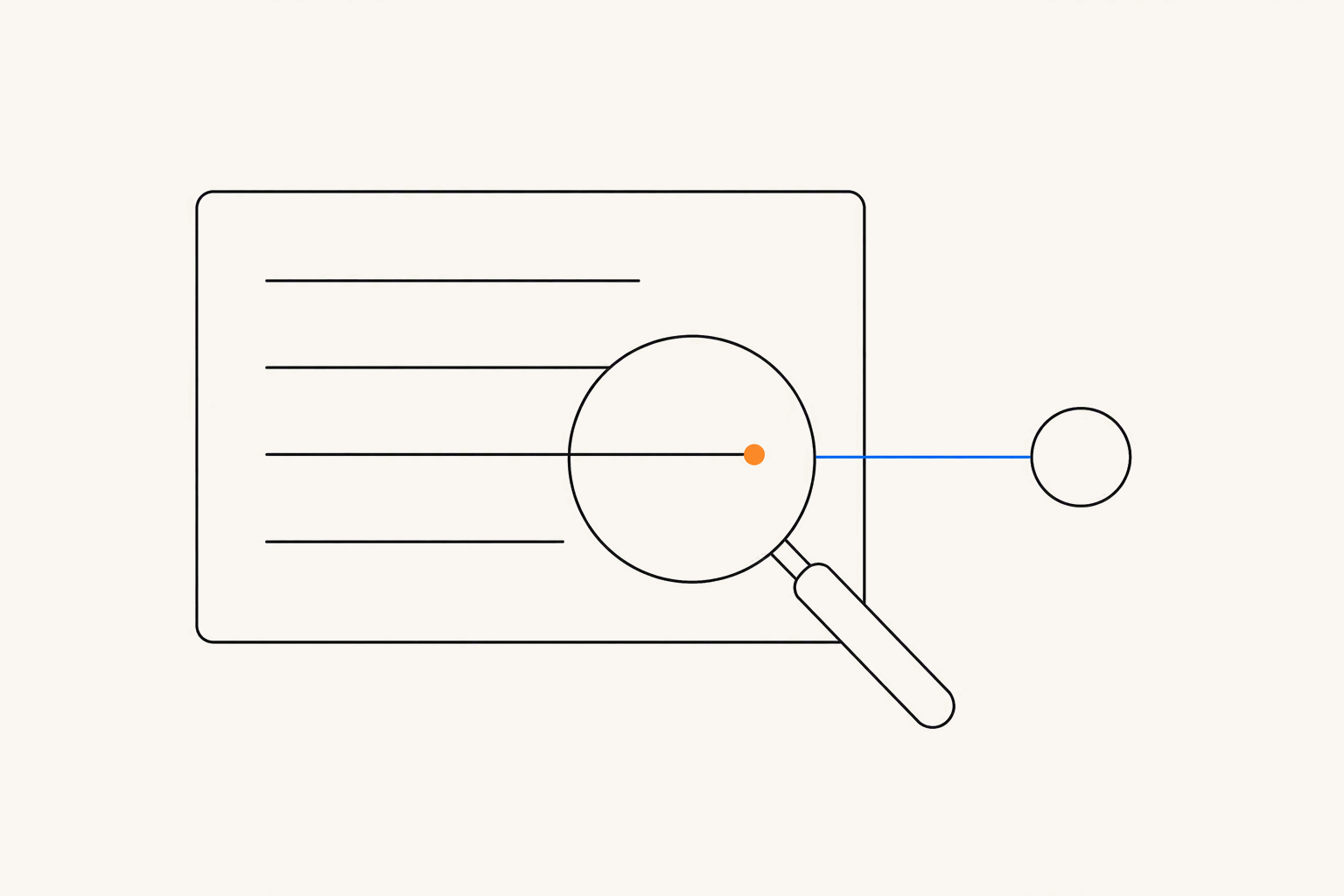
A Gemini visibility tracker asks Google Gemini the questions your buyers ask and records whether each answer names your brand. Depra captures the answer served in the gemini.google.com web app, asked from inside your country once a day, and stores it with your position, the tone of the mention and any websites Gemini cited.
Gemini's sources depend on the language of the question more than ChatGPT's do. In Depra's India study, Gemini attached sources to 90.0% of English answers and 41.3% of Hinglish answers. Depra runs the same questions on ChatGPT, Perplexity and Google AI Overviews, so each engine gets its own score.
How does Depra capture Gemini answers?
Depra captures Gemini from gemini.google.com, the consumer web app people open in a browser. It records the answer as the app serves it, including source links when Gemini shows them. Gemini has no search switch to force on, so some answers carry sources and some do not, and Depra stores both kinds.
Gemini and Google AI Overviews are separate products. AI Overviews are the AI summaries at the top of some Google results pages, and Depra tracks them as a separate engine with separate scores on the Google AI Overview tracker.
Each question is asked from inside the country you track, at country level, in any of 40 markets and up to 10 per project. Depra does not target cities or add personas. Checks run once a day, and every full answer is kept.
What you see for Gemini
Depra scores Gemini on the same numbers it uses for every engine, so your Gemini result sits next to your ChatGPT and Perplexity results. Each number covers you and every competitor you track, from 3 to 20 per project depending on plan.
- Visibility: how often Gemini names your brand, as a share of all Gemini answers to your tracked questions in the dates you choose.
- Position: the rank Gemini gives you when it lists options, where 1 is the first brand it names.
- Sentiment: the tone of each Gemini mention (positive, neutral or negative) and the sentence that carries it.
- Cited websites: the sites linked in the Gemini answers that show sources, labelled editorial, forum, marketplace, government, your own site and more.
- Change over time: your Gemini numbers for this period next to the previous period, last month or last year.
- Every answer stored: each Gemini reply in full, with the brands it named and the sites it linked, ready to export as CSV.
Websites that recommend your competitors
Depra's citation gap analysis lists websites that AI answers cite when they name your competitors but never when they name you, at domain, subdomain and page level. Competitors' own sites are filtered out, so the list shows places you can pitch or join. The full scoring rules are on how Depra measures AI visibility.
Why does Gemini cite fewer sources in Hinglish?
Depra's study measured the drop and did not establish the cause. Across 480 answers collected from inside India on 14 August 2026, Gemini attached at least one source to 90.0% of English answers and 41.3% of Hinglish answers. Hinglish is Hindi and English written together in English letters, which is how most Indians type a question ('sabse accha protein powder kaunsa hai').
Gemini's Hinglish answers were also about a third shorter, and 8 of its 80 Hinglish answers came back in Devanagari script, which the person asking had not typed. The brands changed too. The study counted the brands two answers to the same question have in common: for Gemini, that share was 7.8 percentage points lower between an English and a Hinglish answer than between two runs in the same language. The gap was 2.2 points on ChatGPT and 23.4 on Perplexity.
For tracking, this means an English-only Gemini score can show sources and brands that Hinglish buyers do not get. Depra suggests Hinglish versions of your questions when India is one of your markets, and your report splits visibility by English and Hinglish. The study covered 10 skincare and fashion questions, so check your own category. Method and tables: English vs Hinglish AI shopping study.
| Measure | English | Hinglish |
|---|---|---|
| Answers with at least one source | 90.0% (72 of 80) | 41.3% (33 of 80) |
| Sources per answer, average | 9.4 | 5.2 |
| Answer length, average | 4,609 characters | 3,099 characters |
Can Gemini use your website?
Google-Extended is a token you can name in robots.txt, the file that tells bots which pages they may use. Google says it controls whether content Google crawls may be used to train future Gemini models and for grounding, which means giving Gemini pages from the Google Search index while it writes an answer. Google also says it does not affect inclusion or ranking in Google Search.
No bot visits your site as Google-Extended. Google's normal crawler fetches the page, and the token decides how Gemini may use it. Depra's AI crawler checker lists it as an opt-out token, separate from crawlers that send traffic, and shows the exact robots.txt rule for 41 AI crawlers and tokens from 26 vendors, for your site and your competitors'. The guide to AI crawlers explains each one.
How to check Gemini by hand
You can sample Gemini yourself with a sheet and about an hour a week. The spreadsheet method for tracking brand mentions in AI answers has the columns and scoring rules.
- Pick 10 buying questions. Leave brand names out and use the words your buyers use. If you sell in India, write a Hinglish version of each.
- Ask each one 3 times. Use a new chat in gemini.google.com each time, because reruns return different lists.
- Log what matters. Record named or not, position, tone, and whether the answer showed any sources at all.
- Keep languages apart. Score English and Hinglish rows separately, since Gemini treats them differently.
Where the manual method stops working
Gemini in your own Google account can reflect your location and past activity. 10 questions in 2 languages asked 3 times is 60 answers a week to log. Depra asks from inside your chosen country every day and keeps every answer. Plans start at ₹1,999 a month plus GST, with 7 days free and no card on every Depra plan.