AEO (answer engine optimization) is the work of getting your brand named, recommended and cited inside the answers that AI tools such as ChatGPT, Gemini, Perplexity and Google AI Overviews write for a question. For a brand, it adds a new goal next to ranking a page in Google: being one of the few names the answer mentions.
An answer engine is any tool that replies with a written answer in place of a page of links. Google AI Overviews are one example: the AI-written summary Google places at the top of some results pages. When a buyer asks one of them "which face wash should I buy for oily skin under ₹500?", the reply usually names a handful of brands and links a few websites. AEO is about being in that short list, described correctly, and backed by pages the engine is willing to cite.
AEO full form
In digital marketing and SEO, the AEO full form is answer engine optimization, also spelt answer engine optimisation. It covers the content, website and reputation work that decides whether AI answers mention your brand, and how they describe it.
The same three letters mean something unrelated in trade. In customs, AEO stands for Authorised Economic Operator, a status customs authorities give to trusted importers and exporters. This page is about the marketing term only.
How does AEO work?
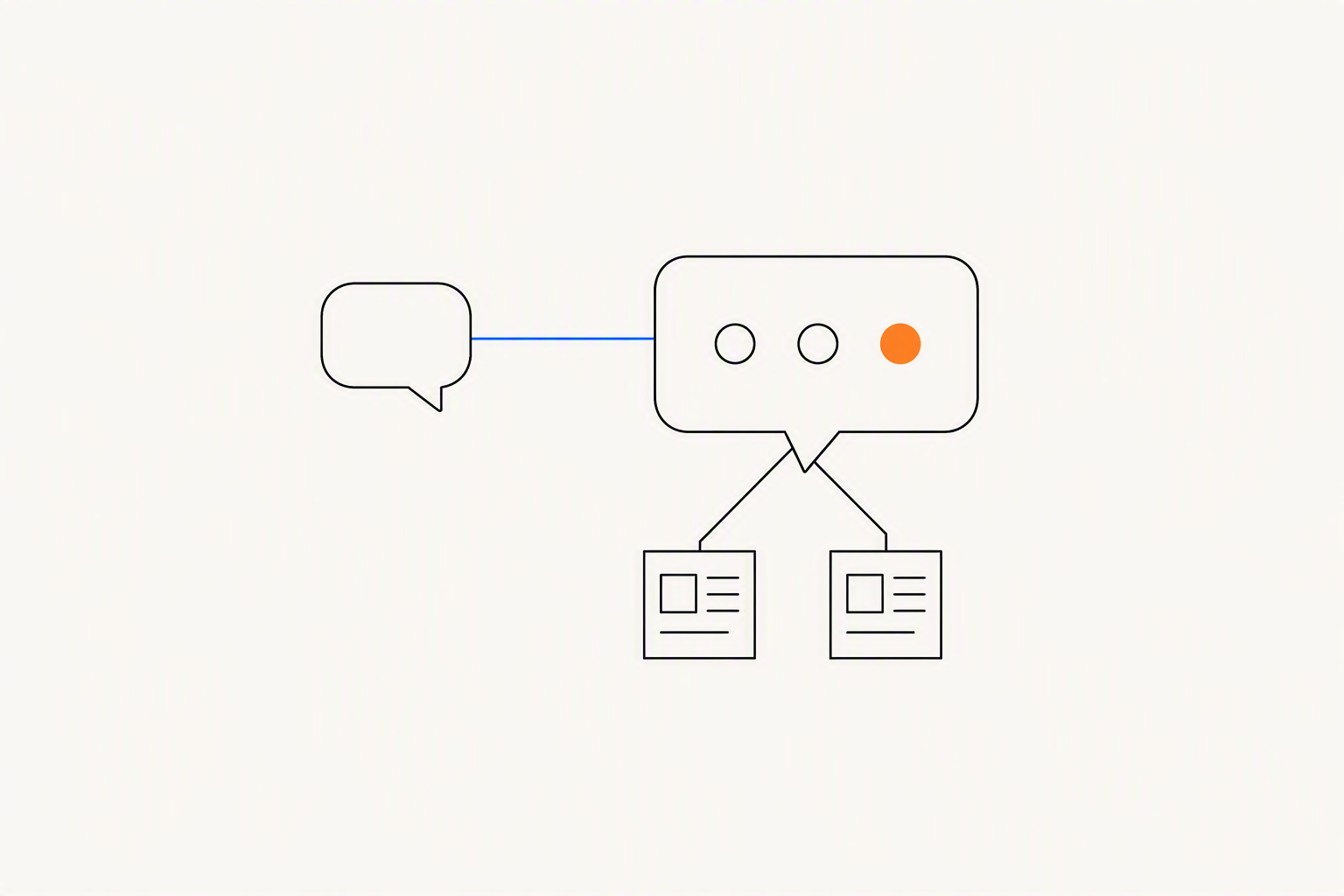
AEO works on the steps an answer engine goes through before it replies. The engine reads the question, searches the web or its index for matching pages, picks a few sources, and writes an answer that names brands and links some of those sources. Your brand can drop out at each step.
- Search. Many answer engines search the live web before they answer. Google says AI Overviews and AI Mode, a separate Google search mode built for longer questions and follow-ups, may run several related searches across subtopics to build one response, a technique it calls query fan-out (Google Search Central).
- Access. An engine can only cite a page it is allowed to reach. Google says there are no extra requirements for AI Overviews: a page has to be indexed, meaning stored by Google so it can appear in results, and eligible to show with a snippet, the short text preview under a result. OpenAI says sites that opt out of its OAI-SearchBot crawler will not be shown in ChatGPT search answers (OpenAI crawler docs).
- Selection. In one controlled test, pages with checkable facts did better. The research paper that named GEO found that adding citations, quotations and statistics raised a page's visibility in AI answers by up to about 40% in a GPT-3.5 test setup (Aggarwal et al., KDD 2024).
- Brand facts. The answer describes your brand with what the engine found about it: your own site, marketplace listings, reviews, lists and forums. If those sources disagree on what you sell or who it is for, the description can be wrong, or you can be left out.
How AEO relates to SEO
SEO (search engine optimization) ranks your pages in a list of search results so people click through, and you measure it in rankings and clicks. AEO gets your brand named inside the written answer, where the reader may never click, and you measure it in mentions, position in the answer and cited websites.
The two share a base. Google says its AI features need no special optimization beyond normal Search eligibility, so a page that is not indexed cannot be a supporting link in an AI Overview. Good SEO keeps your pages findable, and AEO adds the work of being chosen for the answer. The full breakdown is in AEO vs SEO: the differences that matter.
How AEO relates to GEO
GEO (generative engine optimization) is the name used in the 2023 research paper that tested how generative engines choose sources. AEO is the name many SEO and marketing teams use. Both describe getting your brand into AI-written answers, so a team doing one is doing most of the other.
Some writers use GEO for edits to the content itself and AEO for the wider brand programme. For most teams the choice of word does not change the work. Read what GEO means, or see all three terms side by side in AEO vs GEO vs SEO.
An example: a face wash question in English and Hinglish
Take a buyer in India looking for a face wash. In English they might type: "Which face wash should I buy for oily skin in India under ₹500?" Many Indian buyers type the same question in Hinglish, Hindi-English written in English letters: "India mein oily skin ke liye 500 rupees ke andar konsa face wash kharidna chahiye?"
An answer engine replies with a short list of face washes, a line on why each suits oily skin, and on most engines a set of links to the pages it used. The brands in that list get considered. A brand missing from the list does not reach that buyer through the answer.
The language of the question changes the list. Depra's study of 480 India-geolocated answers asked this question and nine other buying questions in both languages, 8 times each. On Perplexity, brand lists overlapped 23.4 points less between English and Hinglish than between two runs of the same question. On ChatGPT the gap was 2.2 points.
What a face wash brand would do with that: check whether it is named in both versions, open the websites cited next to the brands that were named, and work on being listed or reviewed on those sites. Then ask the same questions again and compare the answers.
Gemini attached sources to 90.0% of English answers and 41.3% of Hinglish answers to the same buying questions. (Depra Hinglish study, fieldwork 14 Aug 2026)
AEO checklist: 8 steps
An AEO checklist starts with the questions you want to be named for and ends with a measurement you can repeat. These 8 steps cover access, content, reputation and tracking.
- Write down the buying questions. List 20 to 40 questions a buyer asks before choosing a product in your category, with no brand name in them. If you sell in India, add a Hinglish version of each.
- Record where you stand. Ask each question in ChatGPT, Gemini, Perplexity and Google, and note whether you are named, in what position and in what tone. Answers change between runs, so repeat each question more than once.
- Let AI bots read your site. Check your robots.txt, the file that tells bots which pages they may read. A blocked OAI-SearchBot keeps you out of ChatGPT search answers. The guide to AI crawlers lists the main bots and what each one does.
- Answer the question at the top. Put a direct answer of one or two sentences under a heading that matches the question, so the passage makes sense when quoted on its own.
- Add facts an engine can check. Use specific numbers, named sources and short quotes. These are the edits the GEO paper found raised visibility in its test setup.
- Keep brand facts consistent. Your site, marketplace listings and social profiles should state the same product names, prices and category.
- Get mentioned where engines already look. Find the lists, reviews, forums and publications cited in answers about your category, and work on being included. Citation gap analysis shows the sites that recommend your competitors but never mention you.
- Measure on a schedule. Track the same questions daily or weekly, per engine, and compare each period with the one before.
How do you measure AEO?
You measure AEO by asking the same set of buying questions to each AI engine on a schedule and counting four things in the answers.
- Named: the share of answers that mention your brand, usually called AI visibility.
- Position: where you come in the list when the answer recommends several options.
- Sentiment: whether the answer talks about you warmly, neutrally or critically.
- Cited sites: the websites the answer links to, and whether those sites mention you or only your competitors.
Measuring AEO with Depra
Depra's AI visibility tracking asks your questions to ChatGPT with web search, Gemini and Google AI Overviews every day, and Perplexity every week, from inside the country you choose. It stores every full answer and records the four measures above for you and your competitors. Questions that already contain your name are left out of your scores. Your report shows a confidence range next to each engine's visibility, which tells you how far that number could move by chance.
If ChatGPT leaves your brand out today, start with why ChatGPT does not mention your brand. To compare software for this job, see the best AEO tools.