
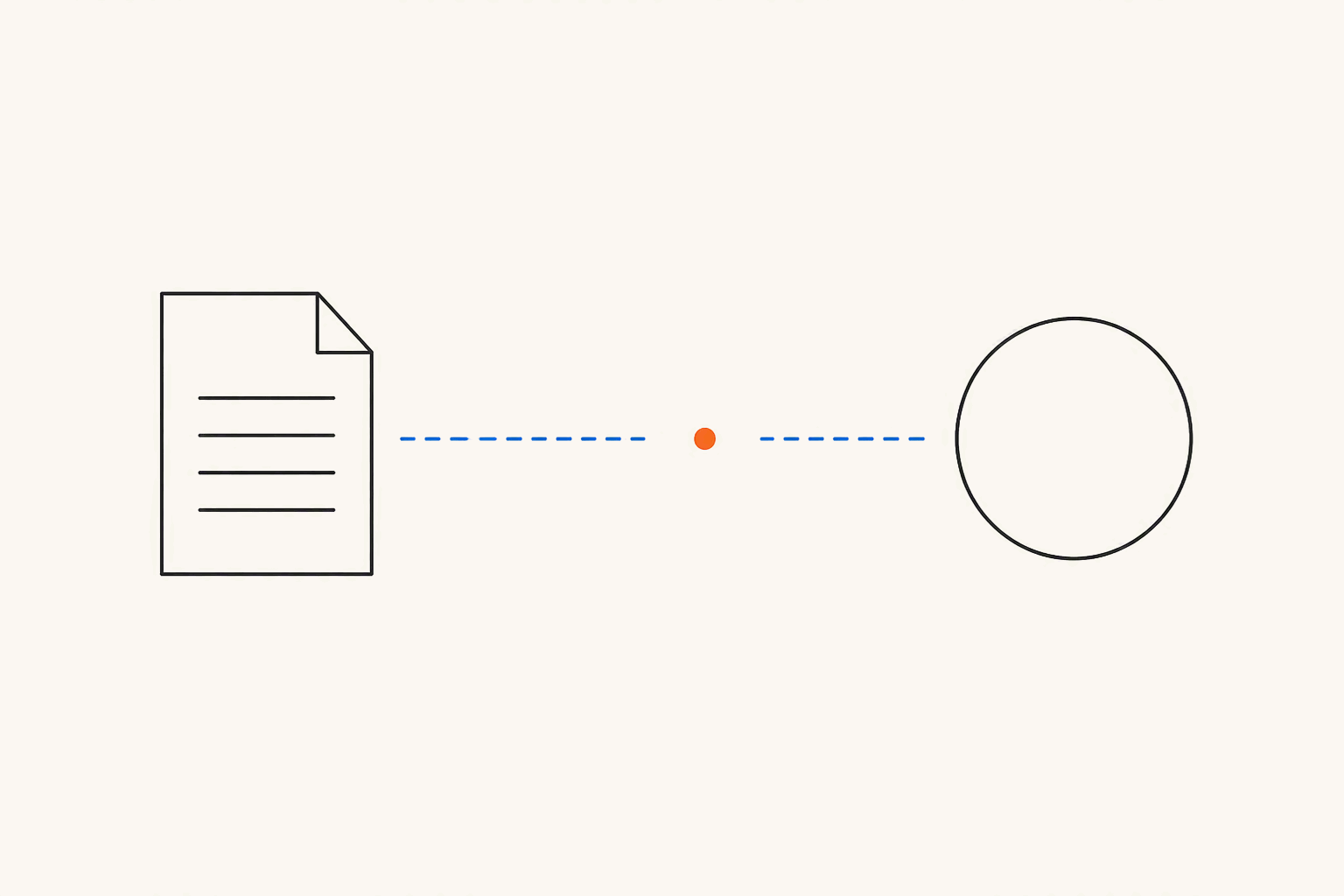
llms.txt is a proposed plain-text file, placed at the root of a website, that tells AI tools which pages on the site matter most. No major AI search engine has confirmed that it uses the file to choose sources, and Google says Google Search ignores it.
The file is common anyway. On 15 September 2026 we checked the 247 websites cited in 480 ChatGPT, Gemini and Perplexity shopping answers from India, plus the websites of 50 of the most-named Indian brands. 132 of the 247 cited sites (53%) and 38 of the 50 brand sites (76%) served an llms.txt file. Most of those files came from a platform: 89 cited sites and 31 brand sites served the default file Shopify now generates for every store.
The AI search glossary explains the other terms used in this guide.
What is llms.txt?
llms.txt is a text file written in markdown, the simple formatting where a line starting with # is a heading and [text](link) is a link. It sits at yourdomain.com/llms.txt and gives an AI tool three things: the name of the site, a short summary, and lists of links to the pages worth reading.
Jeremy Howard published the llms.txt proposal on 3 September 2024 and updated it to version 2, dated 10 August 2026. The format has one required part and a few optional ones:
- A heading with the site or project name. This is the only required section.
- A short summary written as a blockquote, a line starting with
>. - Optional detail in plain paragraphs or lists.
- Sections with link lists, each under a
##heading, where every item is a markdown link with an optional note. - A section called Optional, for links an AI tool can skip when it is short on space.
The proposal also suggests publishing a clean markdown copy of important pages at the same address with .md added. Its author says the files are used most for software documentation. There, coding agents (AI tools that write code) follow them to find reference pages and tutorials. OpenAI and Perplexity both link an llms.txt from their developer docs.
So the file was designed to help an agent that is already on your site find the right page. Choosing which brands an AI answer recommends is a different job.
Does llms.txt work?
For AI agents that choose to read it, the file can point them to the right pages faster. For getting cited in ChatGPT, Gemini, Perplexity or Google AI Overviews (the AI summaries above some Google results), there is no public evidence that it does anything. Here is what has been published, with dates.
Google. Google's AI optimization guide says you do not need machine-readable AI files, markup or Markdown to appear in Google Search or its generative AI features, because Google Search does not use them. It adds that keeping an llms.txt file for other services is fine and will neither help nor harm your visibility or rankings in Google Search. Google logged this note on its Search Central updates page on 15 June 2026. A year earlier, on 17 June 2025, Google's John Mueller posted on Bluesky: "FWIW no AI system currently uses llms.txt."
OpenAI. The OpenAI crawler page tells site owners to allow OAI-SearchBot in robots.txt to appear in ChatGPT search answers. OAI-SearchBot is the crawler that fetches pages for ChatGPT's search results, and robots.txt is the file that tells crawlers which pages they may fetch. The page does not mention llms.txt as a way in (checked 15 September 2026).
Perplexity. The Perplexity crawler page gives the same advice for PerplexityBot, the crawler that finds websites for Perplexity's search results. It also lists no llms.txt signal (checked 15 September 2026).
Chrome Lighthouse. Lighthouse, Google's free page-audit tool, has an llms.txt audit in a group it calls agentic browsing: checks for sites that AI agents visit. It flags a server error on the file and marks a missing file as not applicable, because the file is optional. It does not score rankings.
Our own data. Of the 10 websites AI cited most in our Indian shopping answers, 2 served an llms.txt, 3 had no file and we could not check the other 5. youtube.com was cited in 100 of 480 answers and had no file. Among the brands, Louis Philippe and Van Heusen were each named in 49 answers and Peter England in 48, and none of their websites had a file.
Depra's AI crawler checker also requests /llms.txt for your site and each competitor you track. A missing file does not fail the check, because the file is a proposal with no confirmed effect on citations. Some sites answer that address with a normal web page, so open it in a browser and confirm you see plain text.
How many sites AI cites for Indian shopping have an llms.txt?
We took every website cited in Depra's Hinglish vs English AI shopping study: 480 answers collected from inside India on 14 August 2026, for 10 skincare and fashion buying questions asked 8 times each in English and in Hinglish (Hindi and English mixed, typed in English letters). The engines were ChatGPT with web search, Gemini and Perplexity. A citation is a link an answer shows as its source. We added the websites of 50 of the most-named Indian brands, listed in the method notes below. On 15 September 2026 we requested llms.txt from every site.
| Group | Sites | Written for the site | Shopify default | Plugin generated | No file | Could not check |
|---|---|---|---|---|---|---|
| Websites cited in the answers | 247 | 40 | 89 | 3 | 90 | 25 |
| Websites of 50 of the most-named Indian brands | 50 | 7 | 31 | 0 | 10 | 2 |
Counting every kind of file, 132 of 247 cited websites had one: 53.4% of all, or 59.5% of the 222 we could check. For brand websites it was 38 of 50: 76%, or 79.2% of the 48 we could check. Only 40 cited websites (16.2%) and 7 brand websites (14%) served a file written for that site.
The Shopify default is a template. It opens with a heading that says Agent Instructions followed by the store name, then tells shopping agents how to search the catalogue and check out, and links the store's policy pages. It says almost nothing about the brand's products or best pages. Shopify's developer changelog of 28 May 2026 confirms every store has a default file and explains how to replace it.
The 7 brand websites with a file written for the site were Minimalist, Pilgrim, Foxtale, Fabindia, Lakshita, Manyavar and W. The 10 with no file were Louis Philippe, Van Heusen, Peter England, Allen Solly, Koskii, Indya, Soch, Flying Machine, Mohey and WishCare.
The 10 websites cited in the most answers:
| Website | Answers citing it (of 480) | llms.txt on 15 Sep 2026 |
|---|---|---|
| reddit.com | 106 | Could not check |
| youtube.com | 100 | No file |
| nykaa.com | 93 | Could not check |
| flipkart.com | 79 | Could not check |
| amazon.in | 79 | Could not check |
| instagram.com | 67 | No file |
| smytten.com | 52 | Written for the site |
| ndtvshopping.com | 49 | Could not check |
| hindustantimes.com | 48 | Written for the site |
| myntra.com | 47 | No file |
The full study shows how often each engine cited sources for English and for Hinglish questions.
Method and limits
- Cited list. Every domain cited at least once in the 480 study answers: 247 domains.
- Brand list. Indian-origin brands from the study, ranked by the number of answers naming them. We kept every brand named in at least 7 answers, 55 in all, and left out 5: Roadster, Sangria and Anouk (Myntra house brands), Taneira (its homepage blocked us) and Sparx (its site did not load). That left 50 brand websites. 35 domains are in both lists, so we checked 262 unique sites.
- Check. One request per site to
https://<domain>/llms.txton 15 September 2026 at 08:21 UTC, following redirects, with a 10 second timeout. The request identified itself as desktop Chrome, the way a normal browser does. - What counted. A success response (HTTP 200) with plain text whose first line was a markdown heading (the one required part of the format) or a Rank Math plugin header. 13 cited sites returned a normal web page there and counted as no file, as did one Shopify "Store Unavailable" placeholder. 2 cited sites, reddit.com and 1883magazine.com, returned a bot check page and counted as could not check. Shopify defaults were identified by their fixed heading and by the technical labels Shopify's servers add to each response.
- Limits. 25 cited sites blocked our request, showed a bot check, looped redirects or did not answer, including Reddit, Nykaa, Flipkart, Amazon.in and Meesho, so their status is unknown. It is one check on one day, a month after the answers were collected. A file being present does not mean any AI engine read it. We did not check websites that AI did not cite, so this data cannot show whether a file makes citation more or less likely.
llms.txt vs robots.txt
robots.txt is a web standard, RFC 9309, that tells crawlers which pages they may fetch. llms.txt is a suggestion list. It cannot allow or block anything.
| robots.txt | llms.txt | |
|---|---|---|
| Status | Web standard (RFC 9309) | Proposal (2024, version 2 in 2026) |
| What it does | Allows or blocks named crawlers by path | Points AI tools to pages worth reading |
| Honoured by | Search crawlers such as OAI-SearchBot, Googlebot and PerplexityBot | Some AI agents and coding tools, per the proposal; checked by Lighthouse |
| Effect on AI answers | Blocking OAI-SearchBot keeps you out of ChatGPT search answers, per OpenAI | None confirmed |
If robots.txt blocks a search crawler, a perfect llms.txt will not get you into that engine's answers. Our guide to AI crawlers lists the bots that fetch pages for ChatGPT, Perplexity, Gemini and Google, and what blocking each one does.
How to write an llms.txt file
- Pick the pages. List 5 to 20 pages a buyer's assistant would need: main collections, buying guides, size or shade charts, shipping, returns and contact.
- Write the file. Start with a
#heading holding your brand name, add a one or two sentence summary after>, then group links under##headings. Put nice-to-have links under## Optional. - Publish it at the root. Save it so it loads at
yourdomain.com/llms.txt, then open that address and confirm you see plain text. A normal web page there means the file is missing. - Use your platform's route. On Shopify, add a
templates/llms.txt.liquidfile to your theme to replace the default. On WordPress, SEO plugins such as Rank Math can generate the file. On a custom site, put a static file in the public folder. - Keep it current. Update it when you rename collections or move pages, and check that every link still opens.
Here is an llms.txt example for a fictional Indian skincare brand:
# Example Skin

> Sunscreens and serums made
> for Indian weather.

## Shop

- [SPF](https://example.com/spf)
- [Serum](https://example.com/serum)

## Help

- [FAQ](https://example.com/faq)
- [Returns](https://example.com/ret)

## Optional

- [Blog](https://example.com/blog)
List only pages that exist, and describe products the way your pages do.
Should you add one?
The file is optional. The upside for AI answers is unproven, and if you want llms.txt for SEO, Google says the file neither helps nor harms rankings in Google Search. Shopify stores already have a default file, and replacing it can wait until the work below is done.
Do these first, in this order:
- Let search crawlers in. Check that robots.txt allows OAI-SearchBot, PerplexityBot and Googlebot, and that your server does not block them. A blocked search bot is a fixable reason a brand is missing from one engine.
- Publish pages that answer buying questions. Comparison pages, buying guides and clear product pages give AI answers something to cite. Our LLM SEO guide covers the page formats.
- Get mentioned where AI already looks. In our study, the most cited websites included Reddit, YouTube, marketplaces, Indian news shopping pages and brand blogs.
- Measure before and after. AI answers change between runs, so track the same questions for weeks before judging a change.
Depra checks which of 41 AI crawlers from 26 companies your robots.txt allows, and how often ChatGPT, Gemini, Perplexity and Google AI Overviews name your brand, in English and Hinglish. Start 7 days free on any plan, no card.