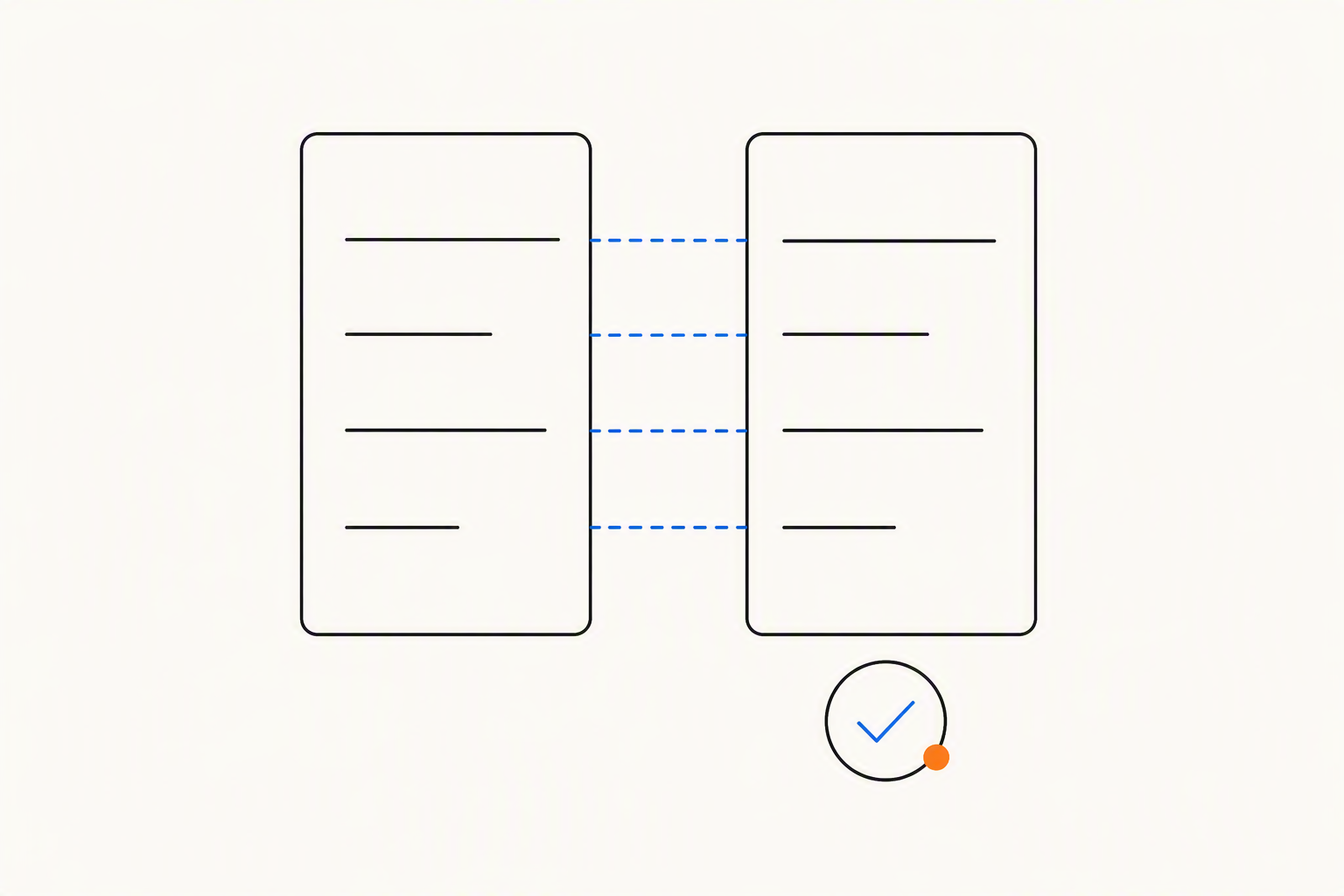
To write Hinglish prompts for AI visibility tracking, type the buyer's question the way an Indian shopper types it in English letters, and keep the product, price cap, use and request identical to your English version. Then run a separate check that both versions ask for exactly the same thing before you start tracking.
A prompt is the question you send to an AI engine. Hinglish is Hindi and English mixed and typed in English letters, the way many Indian buyers write to ChatGPT or Gemini. AI visibility tracking means asking the same questions on a schedule and recording whether the answers name your brand.
This guide uses the 10 English and Hinglish prompt pairs from our study of 480 India-located AI answers. Early in fieldwork, before any analysis, a separate review pass failed 3 of those 10 pairs. The rules below come from how we built and reviewed that set.
Some engines in that study named different brands when the same question arrived in Hinglish (see what changes when Indian buyers ask AI in Hinglish), so a Hinglish prompt has to match its English pair in everything except language.
What is a Hinglish prompt?
A Hinglish prompt keeps the product words in English and writes the words around them in romanized Hindi, meaning Hindi spelled with English letters. Here is pair S01 from our set:
- English: Which face wash should I buy for oily skin in India under ₹500?
- Hinglish: India mein oily skin ke liye 500 rupees ke andar konsa face wash kharidna chahiye?
"Face wash", "oily skin" and "rupees" stay in English. "Mein", "ke liye", "konsa" and "kharidna chahiye" are Hindi. There is no Devanagari, the script printed Hindi uses. Both versions carry the same product, skin type, price cap and country.
Six rules for Hinglish tracking prompts
1. Keep the same meaning and the same request
Both versions must ask for the same thing. Every pair in our study asks what to buy, so every prompt has a buy verb: "should I buy" in English, "kharidna chahiye", "kharidni chahiye" or "kharidun" in Hinglish. If your English prompt asks for a recommendation, a comparison or an explanation, the Hinglish version asks for the same. Pair F04:
- English: Which brand's formal shirts should I buy for men in India?
- Hinglish: India mein men ke liye konse brand ki formal shirts kharidni chahiye?
2. Hold every constraint identical
Price cap, gender, occasion and singular or plural must match across both versions, and so must the country when one version names it. If one word drifts, you cannot tell whether an answer changed because of the language or because of the drift. Pair F01:
- English: Which brand's jeans should I buy for men in India under ₹2000?
- Hinglish: India mein 2000 rupees ke andar men ke liye konse brand ki jeans kharidni chahiye?
We wrote "₹2000" in English and "2000 rupees" in Hinglish because that is how each is typed, and logged it as a deliberate choice.
3. Keep product nouns in English and use natural Hindi grammar
Keep category nouns such as sunscreen and jeans in English. Map idioms instead of translating word by word: pair S05 renders "acne-prone skin" as "acne wali skin". Check gender agreement: in Hindi, the verb and small words like ka, ki and ke change form to match the noun, so jeans takes "kharidni" and face wash takes "kharidna". The review logged ours as correct throughout, citing "jeans ki/kharidni, shoes kharidne hain, saree konsi". Pair S02:
- English: I want to buy a sunscreen that doesn't leave a white cast on Indian skin. Which one is best?
- Hinglish: Mujhe aisa sunscreen kharidna hai jo Indian skin par white cast na chhode. Konsa best hai?
4. Use English letters only
Write every Hinglish prompt in Latin script. A prompt in Devanagari measures Hindi instead of Hinglish. Our 10 Hinglish prompts contain zero Devanagari characters. Depra writes its suggested Hinglish versions under the same rule and drops any that contain Devanagari.
5. Name no brand in either version
A question that contains your brand name cannot show whether an engine recommends you on its own. None of our 20 prompts names a brand, and Depra leaves questions that name your brand out of your scores by default.
6. Keep the Hindi share realistic and steady
Across our 10 Hinglish prompts, Hindi words made up 43% to 69% of each prompt. Pick a similar band and hold it across your set, so "Hinglish" means one consistent way of mixing the two languages in your data.
Three prompt pairs that failed review, and how we fixed them
On 14 August 2026, early in fieldwork and before any analysis, a separate review pass checked version 1.0 of our set on three tests: does the Hinglish read naturally, do both versions mean the same thing, and is the buying intent clear. 7 pairs passed. 3 failed, all in the fashion block. The skincare block passed as written.
Sarees (F05): a market hint in only one version
Neither version named India. The Hinglish word "shaadi" points to an Indian wedding by itself, while "wedding" in English carries no market signal. Any brand difference between the two could have come from that hint instead of the language. The pair also mixed "sarees" and "saree". Fixed pair:
- English: Which sarees should I buy online in India for a wedding on a budget?
- Hinglish: India mein shaadi ke liye budget mein online konsi sarees kharidun?
Kurta sets (F03): one question asking two things
The old version asked where to buy and which brands at once. That invites store names such as Myntra, Amazon and Nykaa Fashion, which mixes retailers into a brand count. Fixed pair:
- English: Which brand's kurta sets should I buy for women online in India?
- Hinglish: India mein women ke liye online konse brand ke kurta sets kharidun?
Formal shirts (F04): no buy verb
Neither version asked what to buy, so it read as a request for brand opinions. The fixed pair, under rule 1, adds "should I buy" and "kharidni chahiye".
What happened to answers collected under the old wording
5 answers for F03 and F05 had come in under the old wording. We deleted them before analysis and logged it. The full verification log and the locked prompt file are public. When you change a prompt's wording, compare answers from the new wording only.
How much Hindi should a Hinglish prompt contain?
In our 10 Hinglish buying prompts, Hindi words made up 42.9% to 69.2% of the words, 58.4% on average. Roughly half to two thirds Hindi words, with product nouns in English, matches the mix our study tested.
| Pair | Hinglish prompt | Words | Hindi words | Hindi share |
|---|---|---|---|---|
| S01 face wash | India mein oily skin ke liye 500 rupees ke andar konsa face wash kharidna chahiye? | 14 | 8 | 57.1% |
| S02 sunscreen | Mujhe aisa sunscreen kharidna hai jo Indian skin par white cast na chhode. Konsa best hai? | 16 | 10 | 62.5% |
| S03 vitamin C serum | Dark spots aur dull skin ke liye India mein konsa vitamin C serum kharidun? | 14 | 6 | 42.9% |
| S04 moisturizer | Indian winters mein dry skin ke liye konsa moisturizer kharidna chahiye? | 11 | 6 | 54.5% |
| S05 acne serum | India mein acne wali skin ke liye 700 rupees ke andar konsa serum kharidun? | 13 | 8 | 61.5% |
| F01 men's jeans | India mein 2000 rupees ke andar men ke liye konse brand ki jeans kharidni chahiye? | 14 | 9 | 64.3% |
| F02 running shoes | Mujhe India mein 3000 rupees ke andar running shoes kharidne hain. Konse lene chahiye? | 13 | 9 | 69.2% |
| F03 kurta sets | India mein women ke liye online konse brand ke kurta sets kharidun? | 12 | 6 | 50.0% |
| F04 formal shirts | India mein men ke liye konse brand ki formal shirts kharidni chahiye? | 12 | 7 | 58.3% |
| F05 sarees | India mein shaadi ke liye budget mein online konsi sarees kharidun? | 11 | 7 | 63.6% |
If half your Hinglish prompts are 30% Hindi and half are 80% Hindi, one Hinglish trend line blends two different ways of asking.
Method and limits. We split each prompt in the final v1.1 file, locked before analysis, on spaces, dropped punctuation and numbers, and counted romanized Hindi words (mein, ke, liye, konsa and the like) as Hindi. India, rupees, men, women, online, budget, best, brand and product nouns counted as English. The study report gives the same range, 43% to 69%, mean about 59%. Moving one word between lists shifts a share by 6 to 9 points. The set covers 10 prompts, 2 categories, one fieldwork day and one style of Hinglish, romanized and heavy on English nouns. The study did not test whether a different Hindi mix changes answers. Depra ran the study and sells AI visibility tracking.
How to check a Hinglish prompt before you track it
Run every pair through this list before it goes live:
- Both versions make the same request: what to buy, a recommendation, a comparison or an explanation.
- Neither version names a brand, a store or a competitor.
- If one version names a country, the other does too. With several markets, neither names one, because each prompt runs in every market.
- Price cap, gender, occasion and singular or plural match.
- No word in one version hints at a market or occasion its pair lacks, the way "shaadi" did against "wedding".
- Product nouns stay in English, and verbs and ka, ki, ke match the noun's gender.
- The Hinglish version has zero Devanagari characters.
- A second check, apart from whoever wrote the pair, confirms both versions ask the same thing.
- You note the date tracking starts, and after any later edit you compare answers from the new wording only.
Tracking Hinglish prompts in Depra
When India is one of your markets, Depra suggests 5 topics with 8 questions each, mostly buying questions, none naming your brand, with a Hinglish version of each in English letters. With India as your only market, some name India. With several markets, none names a country. You can edit, pause or tag each one, so run the checklist above on every suggested pair before you keep it. Read what counts as a prompt in Depra for how questions, versions and topics fit together.
Each language version uses one prompt slot per market. Starter at ₹1,999 a month plus GST includes 20 prompts, enough for 10 English and Hinglish pairs in one market. Growth at ₹7,499 includes 100. The pricing page lists every plan.
Depra asks each version to ChatGPT with web search, Gemini and Google AI Overviews every day and to Perplexity every week, from inside India, and records the language of every reply. Your report shows visibility for English and Hinglish side by side. See Hinglish AI visibility tracking in Depra for what the report covers.
Start 7 days free on any plan, no card. Your first scan starts at signup. Then add your checked English and Hinglish pairs.